Equipment
My gear for astrophotography
Mount & tripod
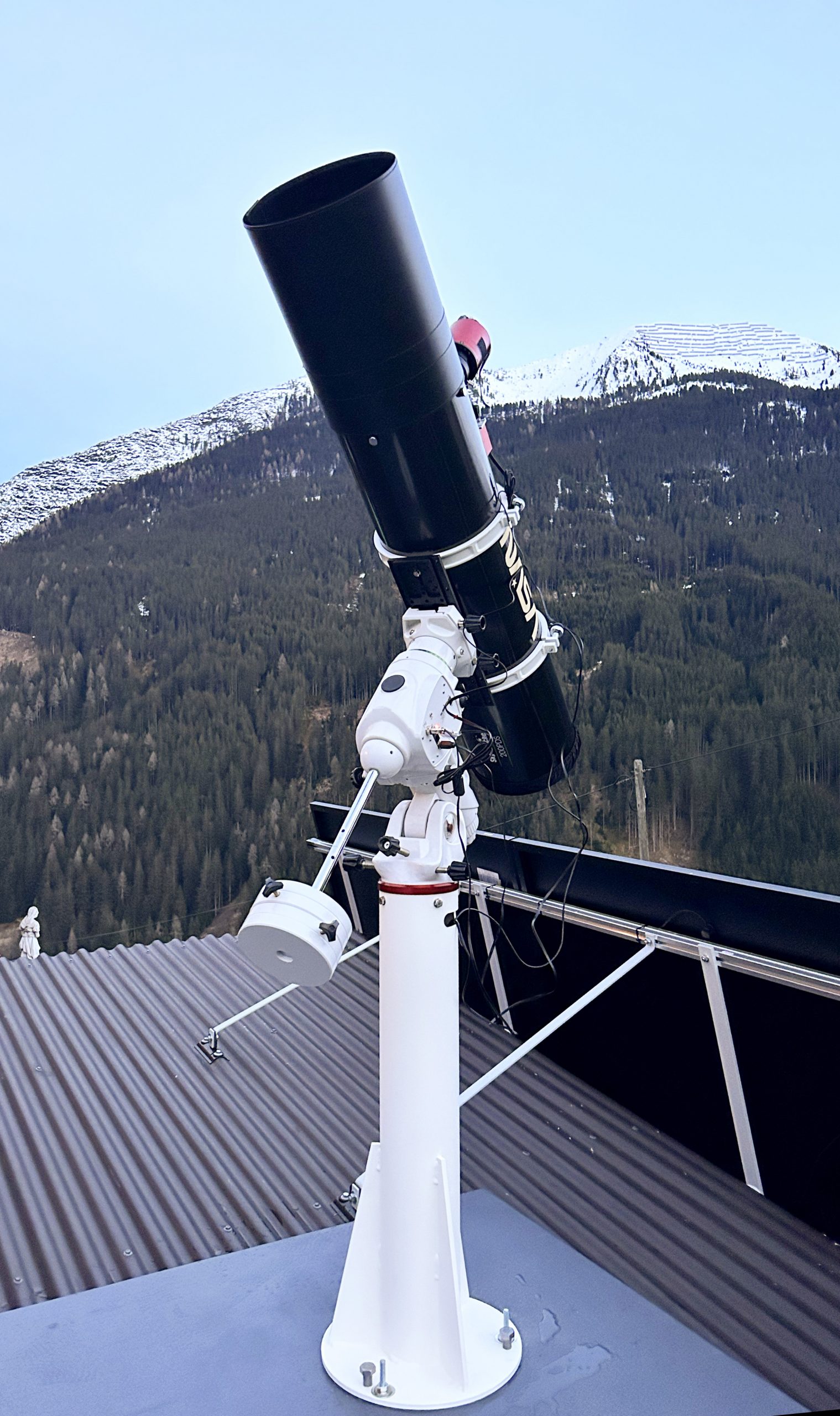
My main mount and tracking system is a Skywatcher EQ6-R Pro. Since April 2023 it has been permanently mounted on a Primalucelab C82 pier. Since setup and teardown currently take a lot of time, my next project is a roll-off weather shelter on rails. A Skywatcher AZ-GTi was added in May 2026 as a mobile complement. This small mount is perfect for travel and is used mainly for visual solar observing, solar photography and Milky Way shots.
Telescope – Newton 1000 mm
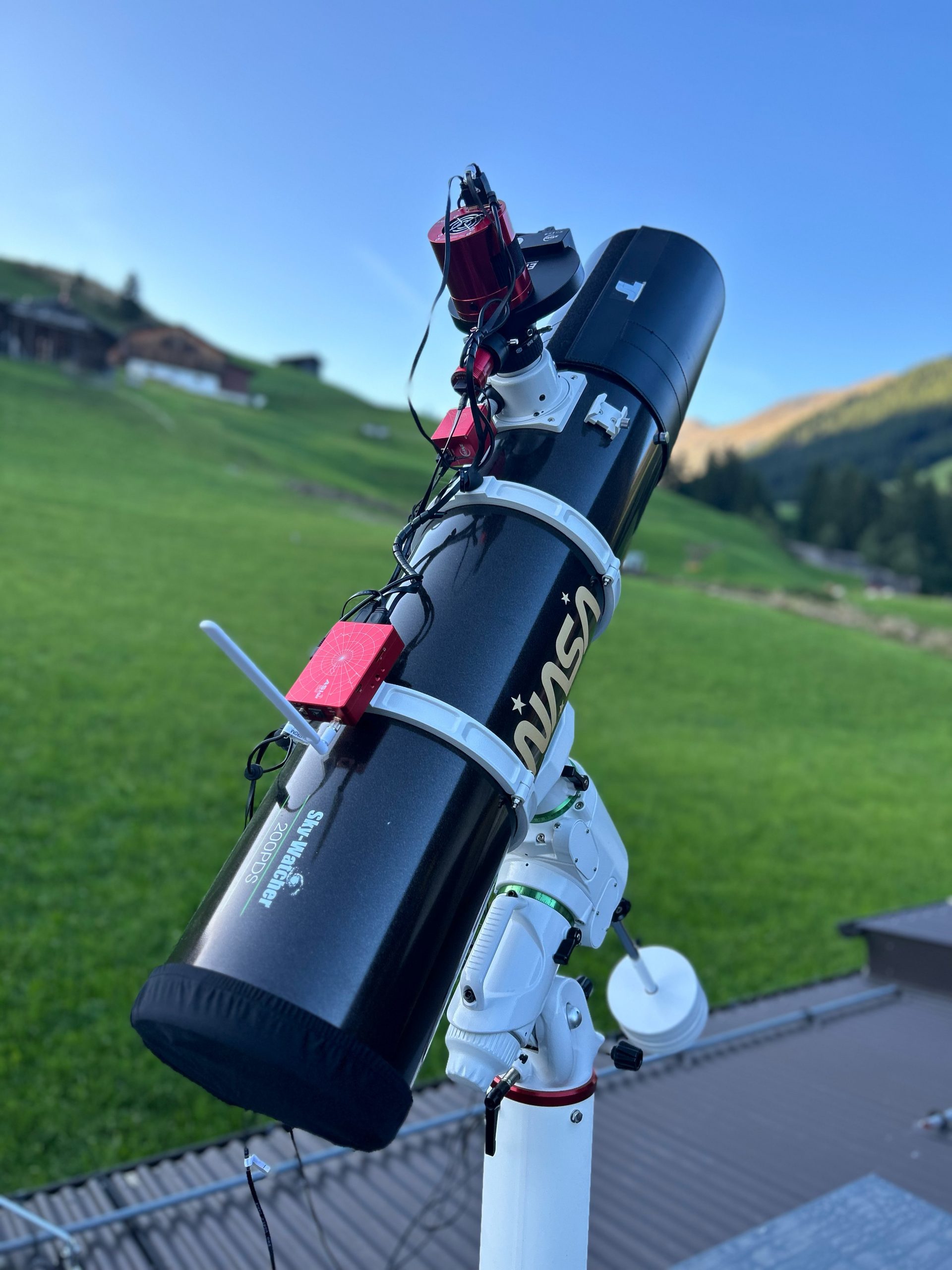
Skywatcher 200PDS Newtonian – 200 mm aperture, 1000 mm focal length. The following optimizations were carried out: the tube is lined inside with black velour film. The focuser, the rear of the secondary mirror and the secondary-mirror spider were painted black (Lacerta Black) to avoid reflections. For better star rendering an aperture ring is fitted on the primary mirror, and a Baader Clicklock holds the camera without tilt. A black hood at the back blocks stray light. Since I currently control everything with the ASIAIR, a ZWO EAF motor focuser is also installed.
William Optics Redcat 51
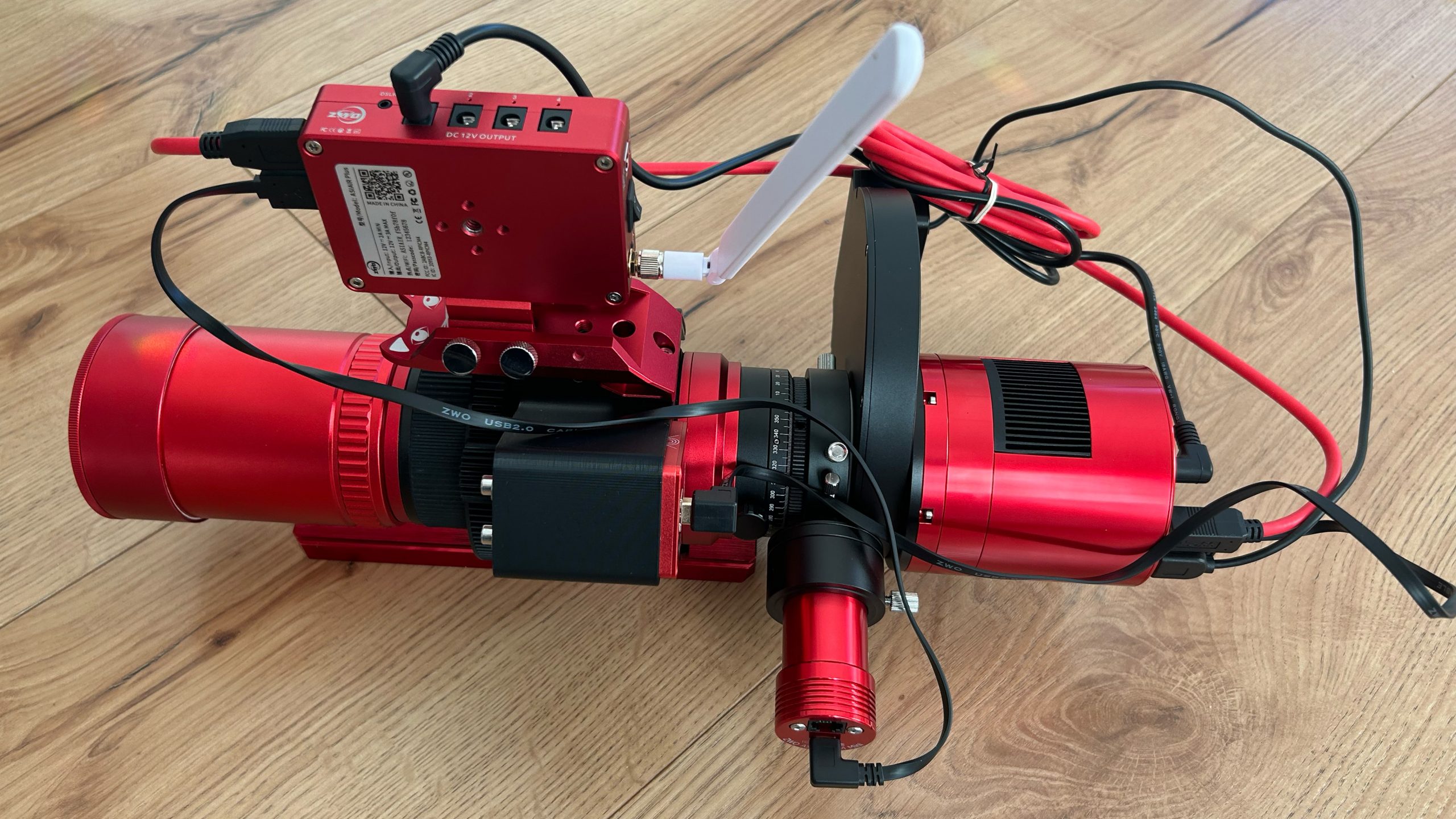
A small but excellent flat-field apo with a 4-element Petzval design. It has a 51 mm aperture and a 250 mm focal length, giving a focal ratio of f/4.9. Thanks to the short focal length it’s ideal for wide-field imaging. Here, too, I’ve installed the ZWO EAF motor focuser.
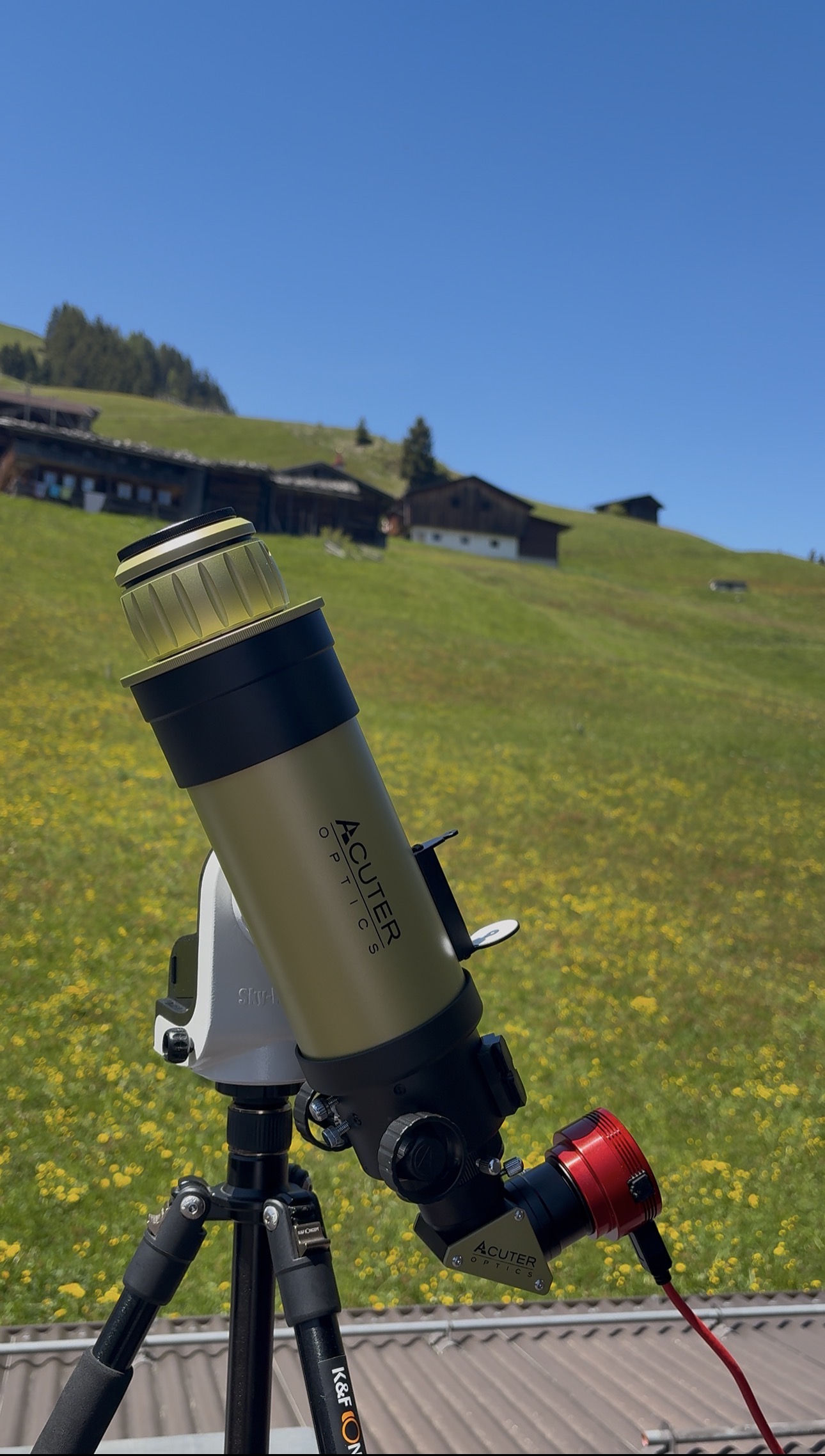
Acuter Elite Phoenix 40
Since May 2026 I’ve been using the Acuter Elite Phoenix 40 for solar observing and photography. The special feature is the built-in H-alpha filter: while ordinary solar filters show the Sun only as a white disc with the occasional sunspot, this telescope reveals the active outer layer of the Sun. This makes it possible to watch gigantic gas and plasma eruptions (prominences) at the Sun’s edge as well as surface structures live. Its handy size makes it ideal for spontaneously capturing the activity of our home star.
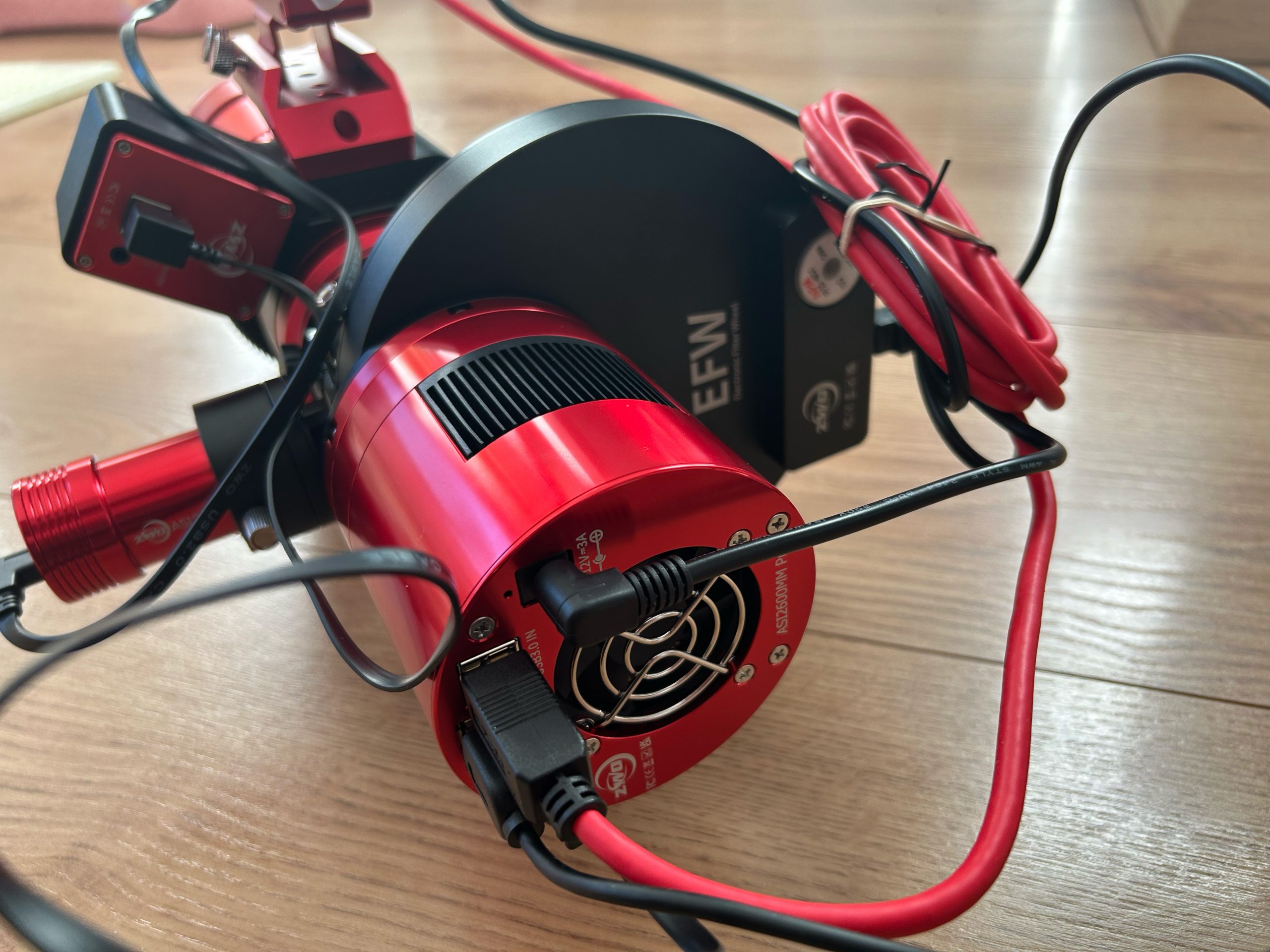
Cameras
As my main deep-sky camera I’ve been using the ZWO ASI 2600MM Pro – a cooled mono astronomy camera – since February 2024. Before that the ZWO ASI 2600MC Pro was in use. The guiding camera is a ZWO ASI 290MM Mini. For the Sun, Moon and planets I’ve used the ZWO ASI 676MC with its square sensor since May 2026. For landscapes and the Milky Way I use a Canon EOS 2000D with various lenses. An Allsky camera also keeps an eye on the sky day and night – including time-lapse, keogram and star trails. And of course there’s a webcam too, so you can look at the location live at any time.
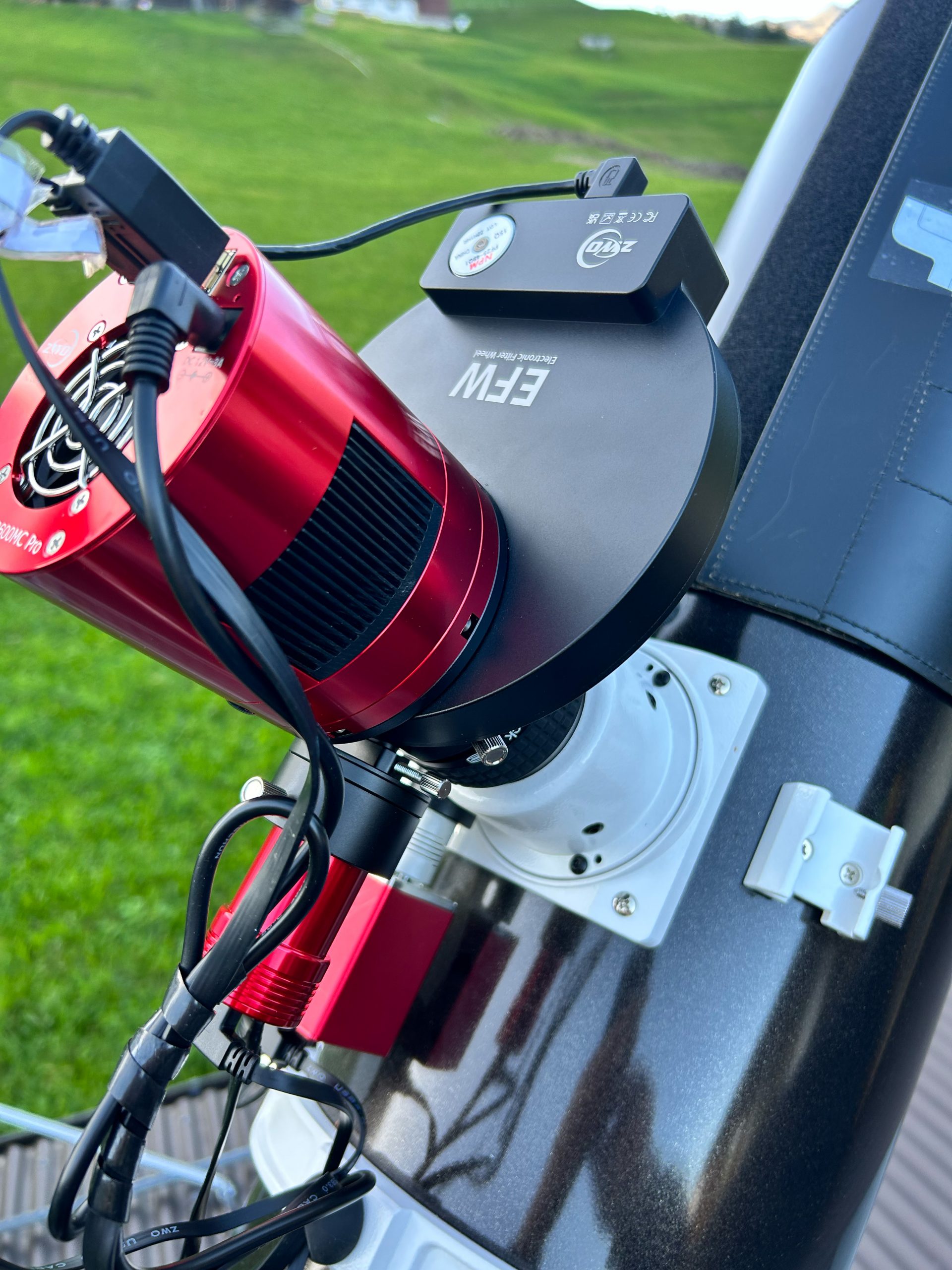
Accessories
I also use, among other things: TS-Optics Newton coma corrector 1.0× Skywatcher Newton coma corrector 0.86× ZWO OAG (off-axis guider) · ZWO EFW (filter wheel) TeleVue 3× Barlow 1.25" · TS-Optics Concenter 2" TS-Optics collimation laser 1.25" · dew shield · light panel for flats Since switching to the mono camera I use ZWO 7 nm LRGB and narrowband filters (SII & OIII), and since 2026 additionally a 3 nm H-alpha filter from the Antlia Pro series. Previously I used the L-eXtreme as well as SII and clear-glass filters from Optolong, among others.
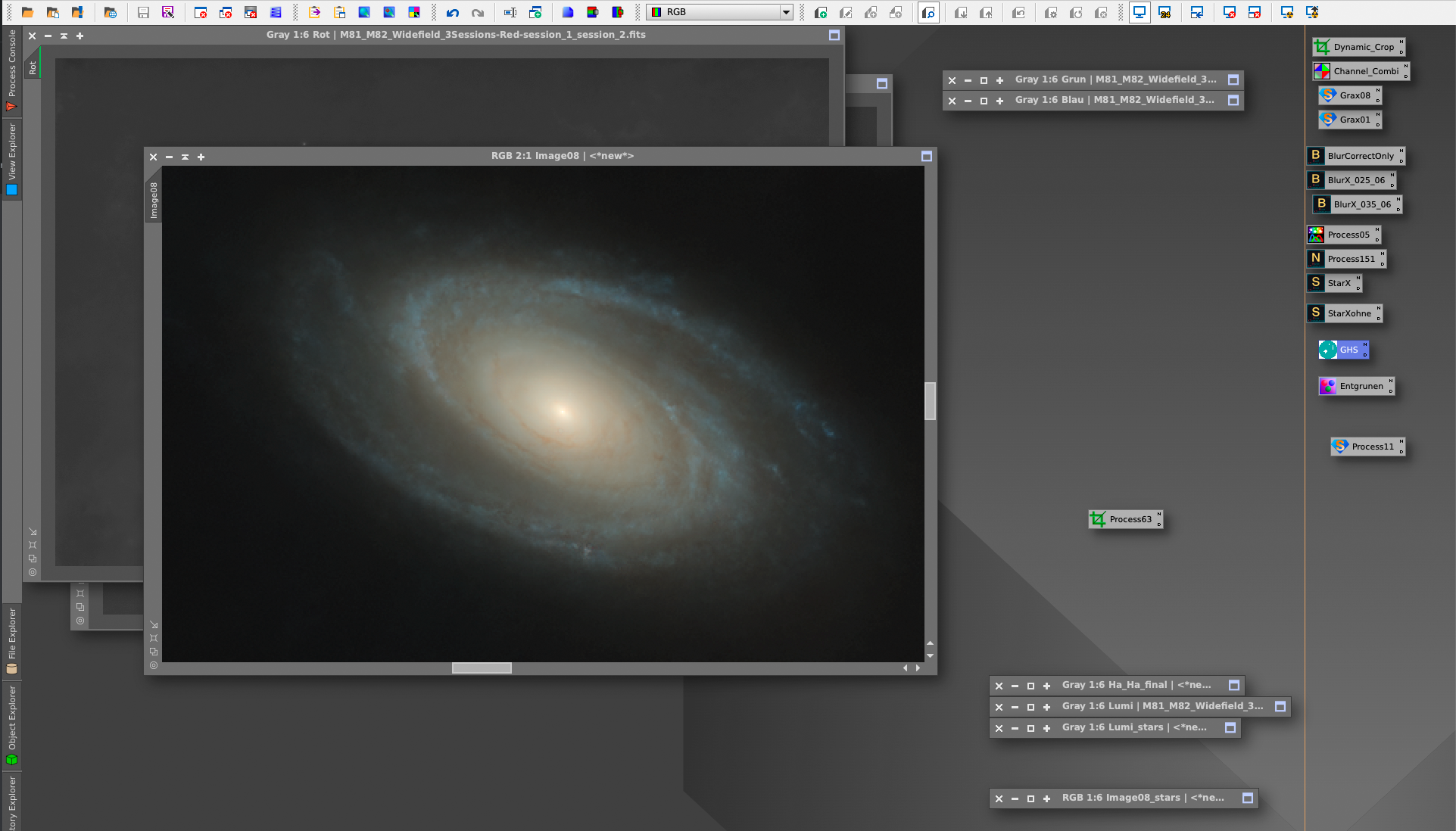
Software
I plan my sessions in advance with Stellarium. For capture and control I use the ASIAIR, plus SharpCap or ASIStudio for the Sun, Moon and planets. For stacking I use AutoStakkert! for the Sun, Moon and planets, and AstroPixelProcessor for deep-sky. The main processing is done in PixInsight – with tools like GraXpert, StarXTerminator and NoiseXTerminator. I add the final touches to the images in Photoshop, among other things with the Nik Collection 7.
Former equipment
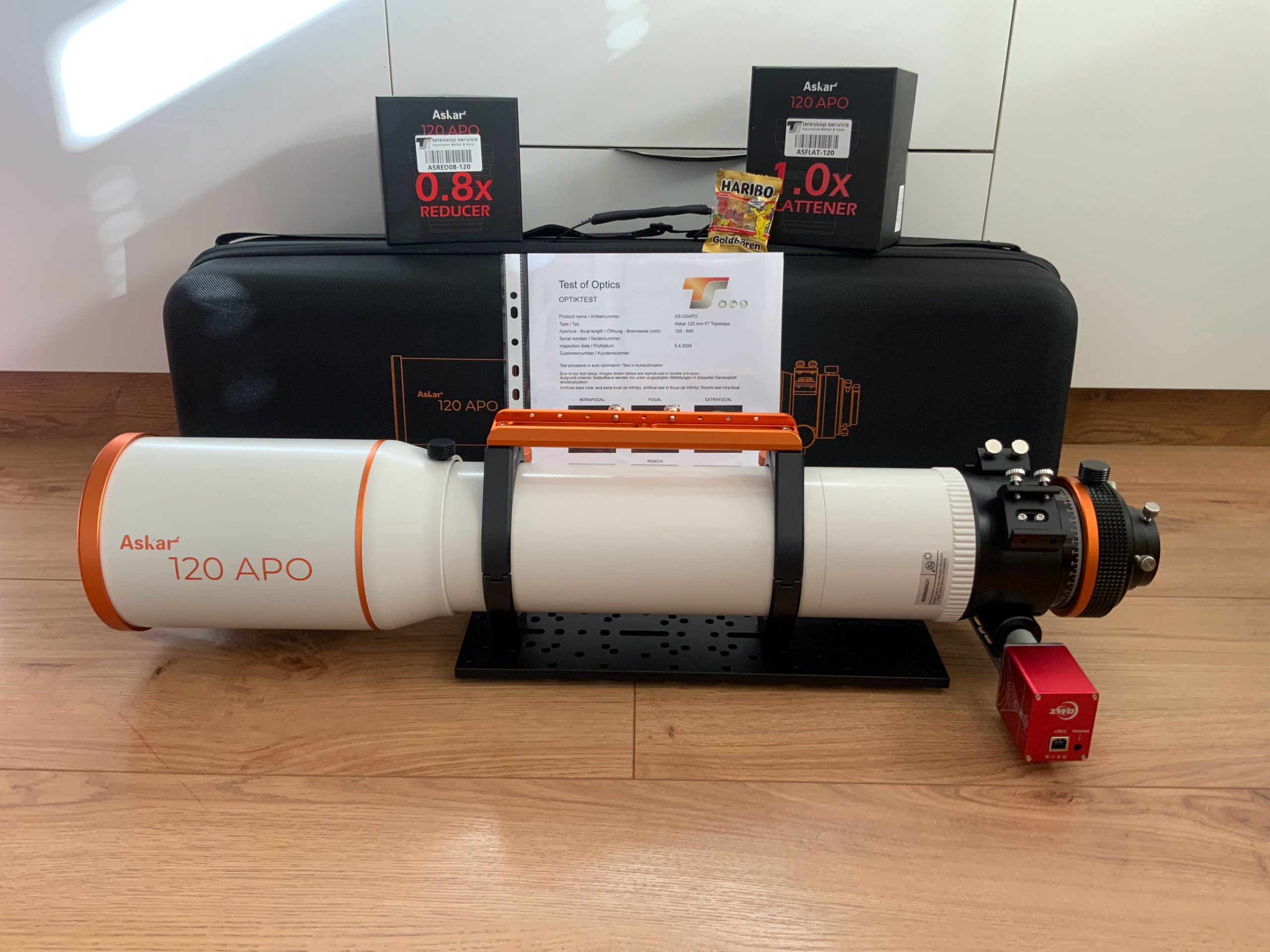
Askar 120APO sold
The Askar 120APO is a high-quality 120 mm APO refractor with excellent color correction and high sharpness. With the 1× flattener it keeps its 840 mm focal length (f/7); with the 0.8× reducer/flattener it shortens to 672 mm (f/5.6). A ZWO EAF (electronic autofocus) is also installed for precise, automated focusing.

Telescope – Newton 518 mm sold
Skywatcher 150 Quattro Newtonian – 150 mm aperture, 600 mm focal length. With the coma corrector this gives a focal length of 518 mm and a focal ratio of f/3.45, which turns the “little” telescope into an imaging machine. The following optimizations were carried out: the tube is lined inside with black velour film. The focuser and the rear of the secondary mirror were painted with Lacerta Black; a milled secondary-mirror holder and an aperture ring from Backyard-Universe were added. Velour film on the spider gives nicer spikes. Instead of the Baader Clicklock, an Artesky Twistlock was fitted. Here, too, a black hood blocks stray light from behind, and the ZWO EAF motor focuser is installed.
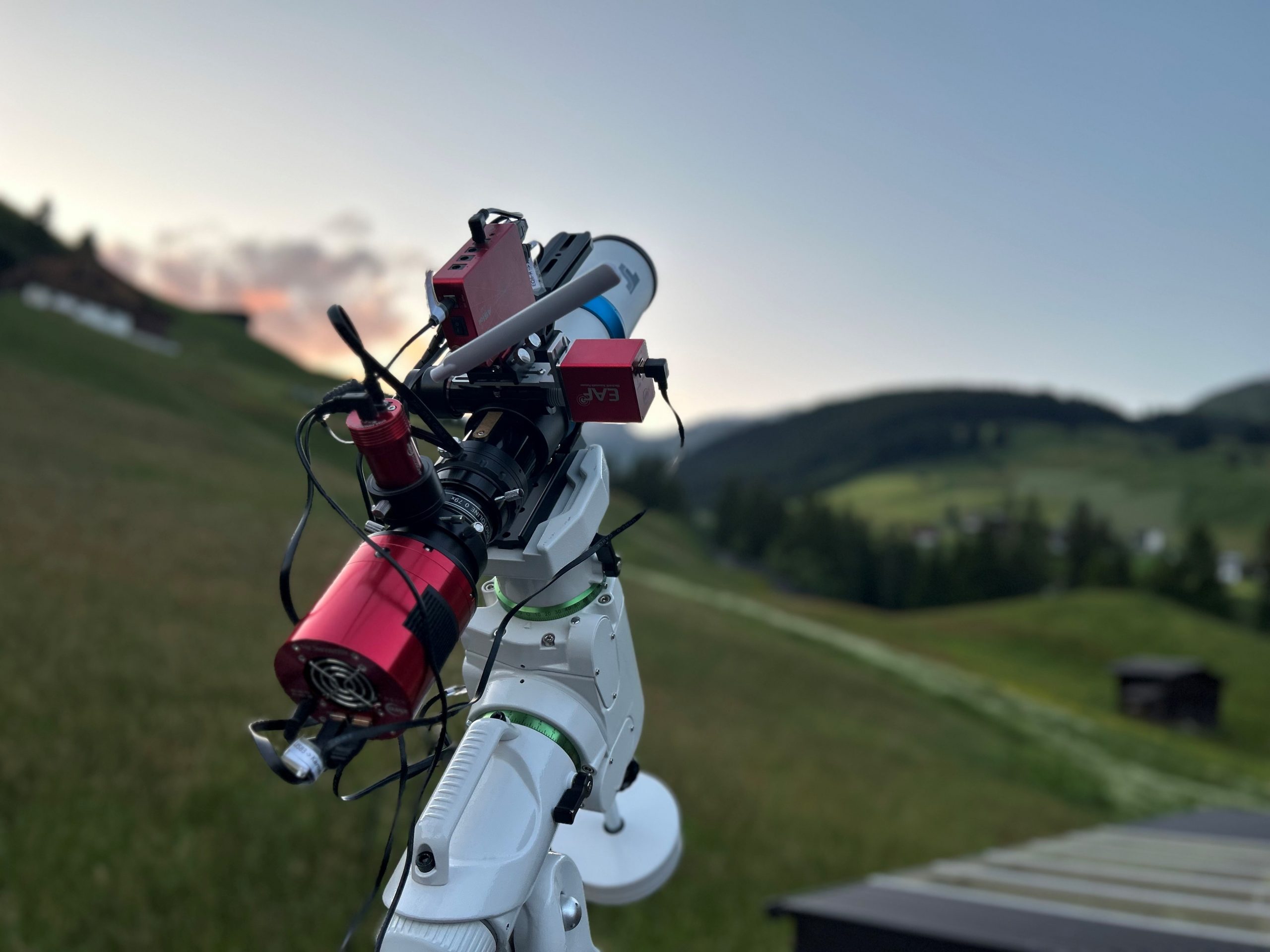
Telescope – APO 70 mm sold
TS-Optics CF-APO 70 mm – this small apochromatic refractor has a 70 mm aperture and a 420 mm focal length. To get the most out of it photographically, I’ve installed the TS-Optics refractor 0.79× corrector. This reduces the focal length to about 332 mm; at the correct distance to the camera sensor the stars are pinpoint right into the corners. This little imaging machine, too, has the ZWO EAF motor focuser installed.